
Direct answer: To answer how many points is each question worth on the SAT: each correct response adds one raw point, not a fixed number of scaled points. Conversion depends on the test form and questions you saw, so a missed-question count helps practice planning but cannot reproduce an official score.
How many points is each question worth on the SAT? Start with raw points
A raw score is the number of questions answered correctly in a section. An incorrect or blank answer adds nothing, but guessing does not subtract a raw point. This count is input to the model; it is not your final section score.
Reading and Writing and Math are each reported from 200 to 800; together they make a 400–1600 total. Since the scaled range is much wider than the raw count, a simple multiplication would not keep results comparable across different test forms.
So the accurate answer is not “every question is worth 10 points.” An extra correct answer may move the score differently across modules or forms. Use this site's calculator for a range and your official College Board report for the result that counts.
- Raw point: one point for a correct response in the section.
- Scaled section score: a 200–800 result produced from the scoring model.
- Total score: Reading and Writing plus Math, from 400 to 1600.
- Guessing: worth attempting because a wrong or blank response does not create a negative raw point.
Why Digital SAT scoring changes with the module route
The Digital SAT is multistage adaptive. Reading and Writing and Math each have two timed modules. The first has a broad mix of difficulty; your performance helps determine whether the second has a higher- or lower-difficulty mix.
A harder route is not a simple bonus, and the lower-difficulty route does not automatically prevent a useful score. College Board says a range of section scores is possible on either route. The model receives different evidence about your knowledge and converts it accordingly.
Some questions are pretest questions and do not count for scoring, according to the official explanation. You cannot reliably identify them during the test. Assigning fixed values to visible questions adds false precision; focus instead on accuracy and time within each module.
| Layer | What you can observe | What it cannot tell you alone |
|---|---|---|
| Raw | How many responses were correct | The final 200–800 score |
| Adaptive | Which second-module difficulty mix you received | A guaranteed score cap or bonus |
| Scaled | The reported section score | A fixed value for one question on every form |
Why one missed question does not have one fixed penalty
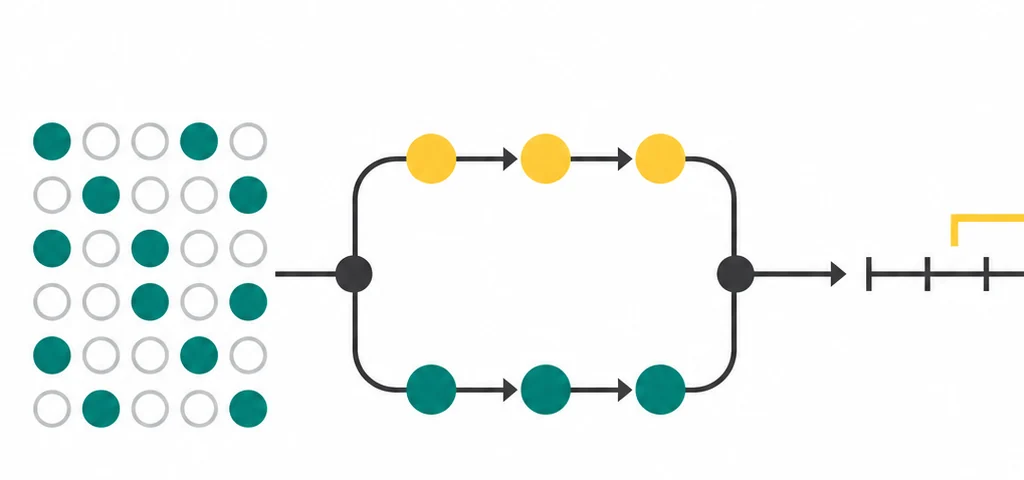
College Board describes an Item Response Theory approach. The model considers right and wrong answers, question characteristics such as difficulty, and whether an answer pattern suggests guessing. Two students with the same number correct can earn different section scores when their questions differ.
A test-prep table can illustrate one practice test and module pattern, but it is not a promise for every SAT date. “Ten mistakes equals 650” hides the route, item mix, and uncertainty.
This is why how many points is each question worth on the SAT has no universal numeric answer. Online claims that each question is worth 10–20 scaled points are rough observations from a sample or score band, not an official rule.
How to use missed questions in a practice plan
Start with the module and question type, not only the total wrong. Note whether each miss came from a concept gap, rushed reading, calculation error, or answer-choice trap. Repeated errors across tests are a stronger signal than one unusual score swing.
Compare module-one accuracy with your route and section result. You cannot infer one item's exact value, but you can see whether timing or a content area repeatedly obscures what you know. After review, use a fresh practice set to check improvement.
If your practical question is how many points is each question worth on the SAT, use a range goal instead of a rigid miss quota. Reduce careless errors in Math Module 1 and reserve five minutes to review, then compare two or three official Bluebook results.
- Log the section, module, domain, and reason for each missed question.
- Separate concept errors from timing and reading errors.
- Use new questions to check whether a fix transfers.
- Compare several practice tests instead of treating one conversion table as a guarantee.
Worked examples without false precision
Two Math practice attempts can have the same number correct but different question difficulty or Module 2 route. Their scaled scores may differ. This reflects the evidence used to estimate a student's level, not a hidden penalty.
If you leave three questions blank and miss three others, both groups add no raw points. But guessing on a blank question preserves the chance of a correct response, so there is no reason to leave it empty to avoid a supposed fixed penalty.
For a 1400 goal, work backward from section goals and your practice profile. One student may need Reading and Writing work; another may improve faster in Math. A calculator can show a range, not promise which mistakes produce an official total.
| Question | Useful conclusion | Unsafe conclusion |
|---|---|---|
| I missed two more questions | Review which module and why | Those questions always cost 20 points each |
| My route changed | Compare section ranges with the route noted | The harder route guarantees a higher score |
| My raw count stayed similar | Check question difficulty and error type | The calculator must be wrong |
When to use Bluebook and an SAT score calculator
For the closest practice experience, use an official Bluebook test and let the app score it. Save the date, module route, and result with your notes so you can compare similar attempts.
A browser calculator helps with a quick range, an unfinished practice test, or seeing how both sections contribute to the total. It should state assumptions and label the output as an estimate, not imply access to confidential College Board parameters.
Use an official score report for an application decision. Check each college's current policy separately: a score's meaning and an institution's use of it are different questions. A practice range can guide study but cannot replace your official result.
- Bluebook: best first choice for an official-style practice result.
- Calculator: useful for quick ranges and module-level planning.
- College Board report: the authoritative record of an official SAT score.
- College admissions page: the current source for testing and score-use policies.
Common mistakes when reading SAT points per question
Do not confuse a raw point with a scaled point, or treat one practice table as an official universal chart. Tables can show patterns but not every item characteristic or unscored pretest question.
An easier or harder module is not a pass-or-fail gate. College Board says either route can produce a range of scores. Answer the first module accurately and show your ability in the second.
Finally, do not turn one practice result into a judgment about your ability. Use the score, route, and content errors together to decide what to do next. That is more useful than arguing whether one question is worth 10 or 20 points.
For a quick practice range, Estimate a practice score For official score-report details, read the SAT score report guide.
SAT question-points questions
How many points is each question worth on the SAT?
Each correct answer contributes one raw point, but there is no fixed number of scaled-score points per question. The Digital SAT converts raw performance with an adaptive model that considers question characteristics, difficulty, and answer patterns.
Is every SAT question worth 10 points?
No. A 10-point or 20-point rule is only a rough observation from a particular practice table or score band. It is not an official conversion that applies to every SAT form or every student.
Do wrong answers lower your SAT score?
A wrong or blank response does not add a raw point, but the SAT does not subtract a raw point as a guessing penalty. Because of that, attempting every question is generally safer than leaving it blank, especially after eliminating choices.
Can I calculate my score from the number of questions I missed?
You can make a practice estimate, but you cannot reproduce an official score from missed-question count alone. The module route, question difficulty, and scoring model matter, so use an official Bluebook result or a clearly labeled range calculator.
How many questions can I miss and still get a 1400?
There is no universal miss-count answer. A 1400 depends on the Reading and Writing and Math section scores, the questions and modules in that test form, and how your strengths are distributed. Use a range as a planning signal, then review the reasons behind your misses.
What is the best source for my official SAT score?
Your College Board score report for the relevant test date is the authoritative source. Practice calculators and third-party tables are useful for preparation, but they cannot replace the official report or the current testing policy published by a college.